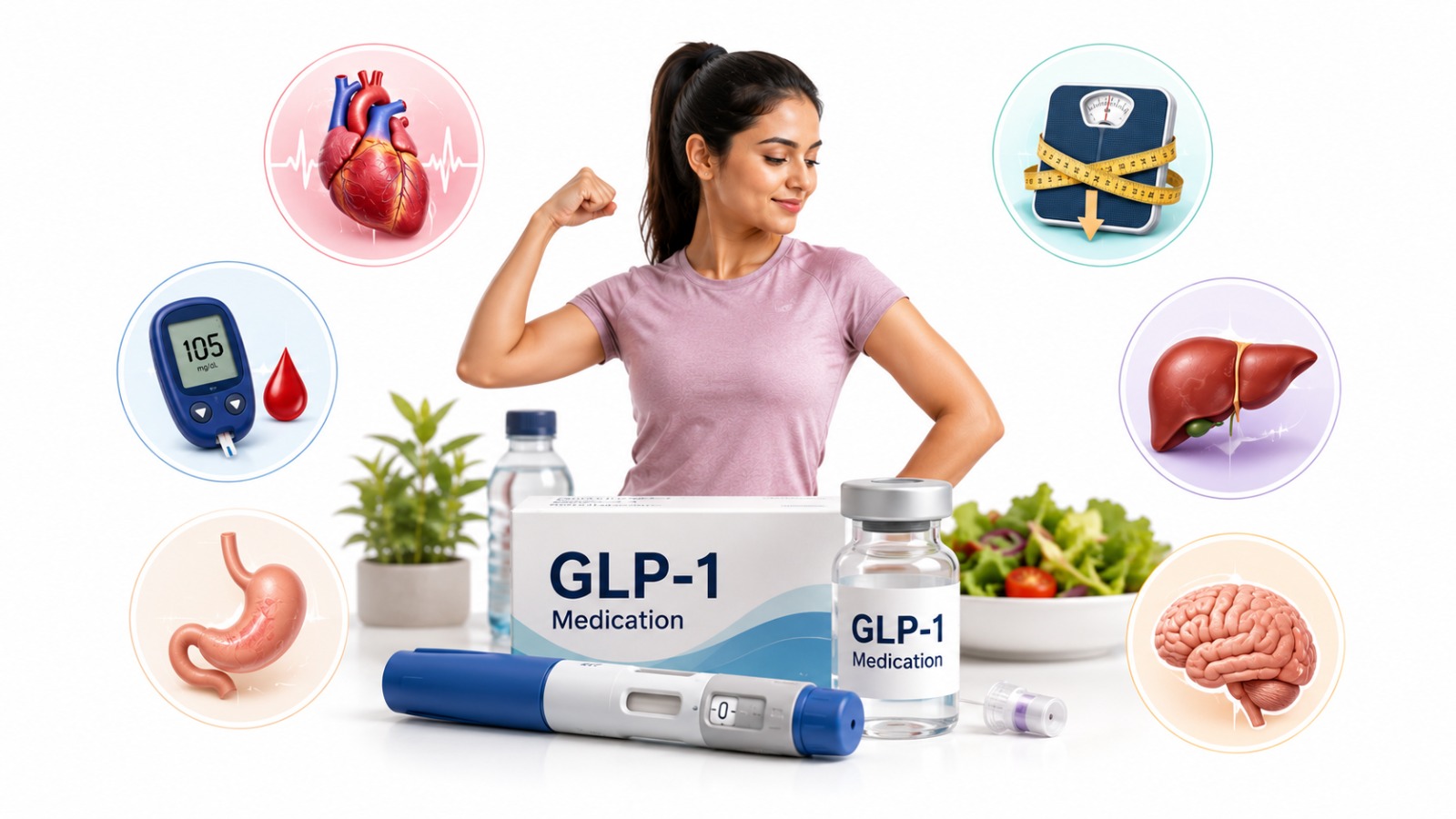
GLP-1 Drugs for Diabetes: Beyond Weight Loss
Diabetologist | Metabolic & Obesity Physician
Comprehensive Diabetes & Metabolic Care Center, Chitradurga
GLP-1 receptor agonists are among the most important advances in the treatment of Type 2 Diabetes. While these medicines are widely recognized for helping with weight loss, their benefits extend far beyond reducing body weight.
Medicines such as semaglutide, liraglutide, dulaglutide, and tirzepatide help improve blood sugar control while also protecting the heart, kidneys, and other organs. For many patients, these medications are now considered disease-modifying therapies rather than simply weight-loss injections.
How Do GLP-1 Medicines Work?
GLP-1 (Glucagon-Like Peptide-1) is a natural hormone released by the intestine after eating. GLP-1 medicines mimic this hormone and work on several organs simultaneously to improve glucose control.
Pancreas
Increase insulin release only when blood sugar is elevated and reduce glucagon, helping lower glucose safely.
Stomach
Slow stomach emptying, reducing rapid blood sugar spikes after meals and helping you stay full longer.
Brain
Reduce appetite, improve satiety, and help decrease calorie intake, supporting healthy and sustained weight loss.
Multiple Benefits with One Treatment
By improving insulin action, reducing appetite, and lowering glucose fluctuations, GLP-1 medicines help reduce HbA1c while supporting long-term metabolic health.
7 Benefits Beyond Weight Loss
1. Heart Protection
Several GLP-1 medicines reduce the risk of heart attack, stroke, and cardiovascular death, particularly in people with Type 2 Diabetes and established cardiovascular disease.
2. Kidney Protection
They help slow diabetic kidney disease by reducing protein leakage in urine, preserving kidney function, and lowering the risk of kidney failure.
3. Better Liver Health
GLP-1 therapy can reduce liver fat, improve liver enzyme levels, and may help people with metabolic dysfunction-associated steatotic liver disease (MASLD).
4. Improvement in Sleep Apnea
Weight loss and reduced inflammation may improve obstructive sleep apnea and enhance overall sleep quality.
5. Joint Health and Mobility
Reduced body weight decreases stress on joints and may improve symptoms of knee osteoarthritis while supporting better mobility.
6. Potential Brain Benefits
Early research suggests possible neuroprotective effects in conditions such as Alzheimer's disease and Parkinson's disease, although more studies are still needed.
7. Better Overall Metabolic Health
GLP-1 medicines may reduce blood pressure, improve cholesterol and triglyceride levels, decrease visceral fat, and lower inflammation throughout the body.
Who May Benefit Most from GLP-1 Therapy?
- People with Type 2 Diabetes who need better blood sugar control.
- Individuals who would benefit from significant weight loss.
- Patients with established heart disease or high cardiovascular risk.
- People with diabetic kidney disease or at high risk of kidney complications.
- Individuals with fatty liver disease (MASLD).
- Patients whose blood sugar is not adequately controlled with metformin alone.
- People who may need to delay or reduce insulin therapy.
GLP-1 receptor agonists can be safely combined with other diabetes treatments such as metformin, SGLT2 inhibitors, and basal insulin when prescribed by a healthcare professional.
Important Safety Information
| Topic | What You Should Know |
|---|---|
| Common Side Effects | Nausea, vomiting, constipation, diarrhea, bloating, and reduced appetite are common during the first few weeks and often improve over time. |
| Rare Risks | Gallbladder disease and pancreatitis are uncommon but important potential risks. Immediate medical attention is needed for severe abdominal pain. |
| Who Should Avoid Them? | Some GLP-1 medicines are not recommended for people with a personal or family history of medullary thyroid carcinoma or Multiple Endocrine Neoplasia Type 2 (MEN2). |
| Risk of Low Blood Sugar | GLP-1 medicines alone have a low risk of hypoglycemia, but insulin or sulfonylurea doses may need adjustment when starting treatment. |
Frequently Asked Questions
Are GLP-1 medicines only for weight loss?
No. They were originally developed to improve blood sugar control in Type 2 Diabetes and are now recognized for protecting the heart and kidneys while supporting healthy weight loss.
Can GLP-1 medicines replace insulin?
Not always. Some people may reduce or delay insulin use, but treatment decisions depend on individual diabetes severity and should be made by a diabetologist.
How long does it take to see benefits?
Blood sugar improvements often appear within a few weeks, while significant weight loss and cardiovascular benefits develop gradually over several months.
Can these medicines be combined with other diabetes drugs?
Yes. GLP-1 receptor agonists are commonly used with metformin, SGLT2 inhibitors, and basal insulin under medical supervision.
A Message from Dr. Prashanth G
GLP-1 receptor agonists represent a major advancement in modern diabetes care. Their benefits extend well beyond lowering blood sugar and reducing body weight. For many people with Type 2 Diabetes, these medicines also help protect the heart, kidneys, liver, and overall metabolic health.
Every patient is different, and the choice of medication should be based on your medical history, cardiovascular risk, kidney function, lifestyle, treatment goals, and affordability.
If you have Type 2 Diabetes and would like to know whether GLP-1 therapy is suitable for you, consult a diabetologist to develop a personalized treatment plan that supports your long-term health.