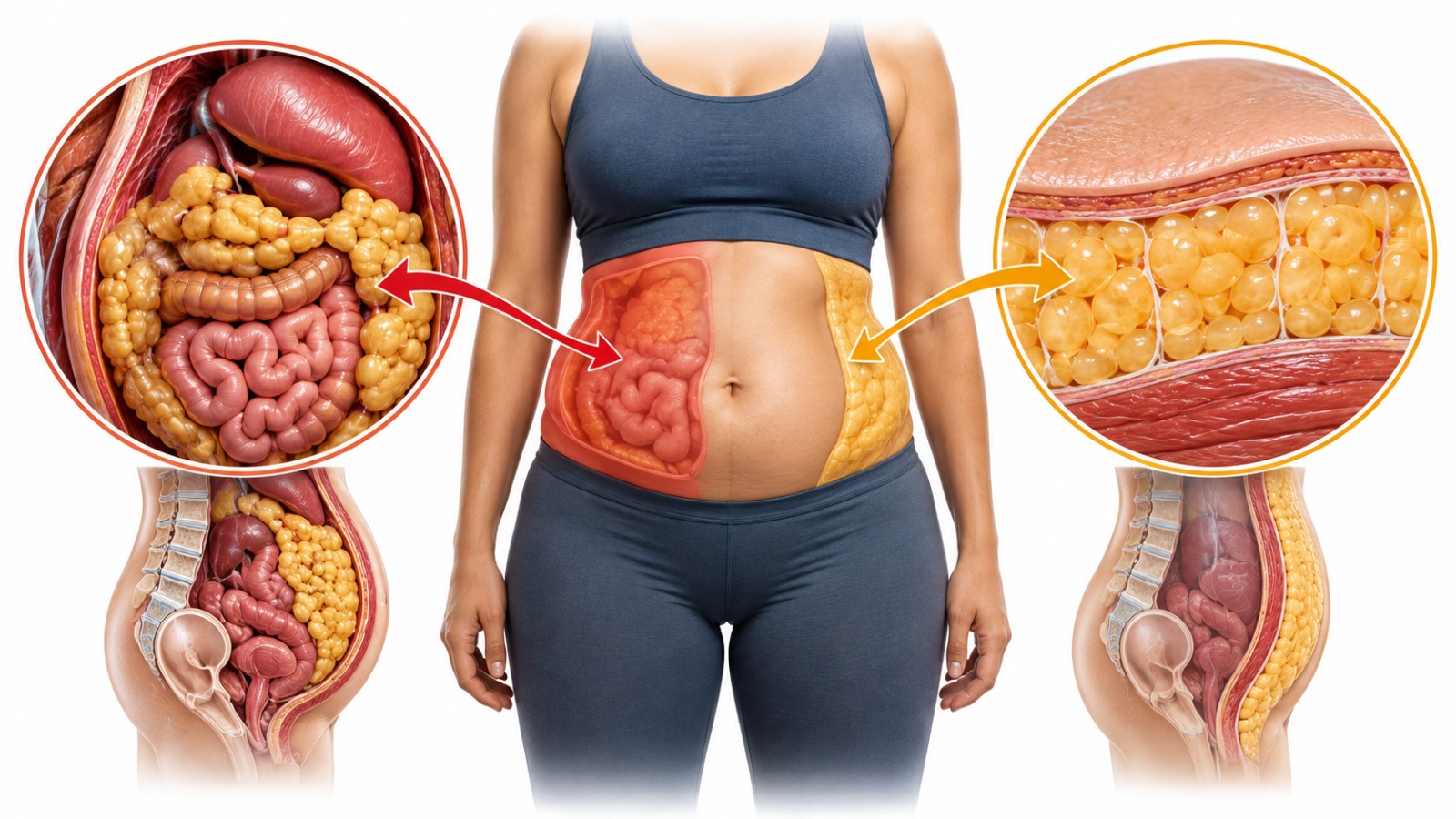
Visceral Fat vs Subcutaneous Fat: Why Location Matters More Than Total Weight
Not all body fat is the same. Where fat is stored—especially around the organs inside the abdomen—can be an important indicator of metabolic and cardiovascular health.
Comprehensive Diabetes & Metabolic Care Center, Chitradurga
Why Does Fat Location Matter?
When people think about body fat, they often focus on total body weight or body mass index (BMI). These measurements can be useful, but they do not tell the whole story.
Two people with the same weight or BMI can have very different body-fat distributions. One person may carry more fat underneath the skin, while another may have a greater amount of fat stored deep inside the abdomen around internal organs.
This distinction matters because visceral fat is metabolically active and is associated with several changes that can affect insulin sensitivity, blood pressure, blood lipids and cardiovascular health.
The Two Main Types of Body Fat
Visceral Fat
Visceral fat is stored deep inside the abdominal cavity around organs such as the liver, pancreas and intestines.
- Located beneath the abdominal muscles.
- Surrounds internal abdominal organs.
- Is metabolically active.
- Is associated with insulin resistance and metabolic dysfunction when present in excess.
- Can contribute to increased cardiometabolic risk.
Subcutaneous Fat
Subcutaneous fat is stored directly underneath the skin. It is the softer fat that can generally be pinched with your fingers.
- Located beneath the skin.
- Commonly found around the abdomen, hips, thighs and arms.
- Provides insulation and energy storage.
- Its metabolic effects differ from those of visceral fat.
- Its presence does not automatically indicate poor metabolic health.
Visceral Fat vs Subcutaneous Fat
| Feature | Visceral Fat | Subcutaneous Fat |
|---|---|---|
| Location | Deep inside the abdomen | Under the skin |
| Relationship to organs | Surrounds internal abdominal organs | Does not surround internal organs |
| Visibility | Usually cannot be directly seen or pinched | Can often be seen or pinched |
| Metabolic activity | Highly metabolically active | Metabolically active but behaves differently |
| Health significance | Higher amounts are associated with increased cardiometabolic risk | Risk depends on amount, distribution and overall metabolic health |
| Measurement | Usually estimated using imaging or indirect measures | Can be assessed using skinfolds, body-composition methods or imaging |
Why Visceral Fat Can Be More Concerning
Visceral fat is not simply inactive storage tissue. It participates in metabolic and endocrine processes and can release fatty acids and signaling molecules that influence the body's metabolism.
Excess visceral fat has been associated with insulin resistance, abnormal blood lipids, elevated blood pressure and increased risk of cardiometabolic disease.
Who Tends to Carry More Visceral Fat?
Visceral fat distribution varies considerably between individuals. Factors such as age, sex, genetics, hormonal status, physical activity, diet and overall energy balance can influence where excess fat is stored.
How Can You Estimate Visceral Fat Risk?
Visceral fat cannot be accurately assessed simply by looking at someone's body shape. Several approaches can provide useful information, although they differ in precision.
- Waist Circumference: Measuring waist circumference is a practical clinical marker of abdominal fat and can help identify increased metabolic risk.
- Waist-to-Height Ratio: Comparing waist circumference with height can provide another simple indication of central fat accumulation.
- Body Composition Analysis: Some body-composition technologies can estimate visceral fat, although the accuracy depends on the device and method used.
- Medical Imaging: CT and MRI can quantify visceral adipose tissue more directly, but they are generally not required simply for routine weight assessment.
Why Reducing Visceral Fat Is a Priority
When excess visceral fat is present, reducing overall excess body fat can improve several aspects of metabolic health.
Better Insulin Sensitivity
Reducing excess abdominal fat may improve the body's response to insulin and support better glucose regulation.
Improved Blood Sugar
Weight management and improved metabolic health can contribute to better blood glucose control in people at risk of or living with type 2 diabetes.
Cardiovascular Health
Addressing excess visceral fat as part of an overall healthy lifestyle can help reduce several cardiometabolic risk factors.
Better Metabolic Health
Improvements in abdominal fat distribution often occur alongside improvements in blood pressure, lipids and other metabolic measures.
What Helps Reduce Visceral Fat?
There is no single exercise, food or supplement that selectively removes visceral fat. The most effective approach is usually a sustainable strategy that improves overall metabolic health.
- Regular Physical Activity: Combine aerobic activity with resistance training. Regular movement can improve insulin sensitivity and support healthy body composition.
- Balanced Nutrition: Focus on vegetables, whole foods, adequate protein, high-fiber foods and appropriate portions while limiting highly processed foods and excess added sugars.
- Calorie Awareness: If weight loss is appropriate, a sustainable energy deficit can help reduce overall body fat, including visceral fat.
- Adequate Sleep: Consistently poor sleep can negatively affect appetite regulation, metabolism and weight management.
- Stress Management: Chronic stress can make healthy eating, sleep and physical activity more difficult to maintain.
- Medical Support When Needed: People with obesity, diabetes or other metabolic conditions may benefit from individualized medical treatment and structured weight-management support.
Why Visceral Fat Matters in Diabetes
Visceral fat and insulin resistance are closely linked. When excess visceral fat is present, metabolic signaling can become impaired, contributing to difficulties with glucose regulation.
This is particularly important for people who have prediabetes, type 2 diabetes, fatty liver disease, high blood pressure or abnormal cholesterol levels.
Can Someone Look Thin and Still Have Excess Visceral Fat?
Yes. Body appearance and BMI do not always accurately reflect fat distribution or metabolic health.
Some individuals with a normal BMI may have relatively higher amounts of abdominal or visceral fat, particularly when they have low muscle mass, limited physical activity or other metabolic risk factors.
This is one reason why metabolic health should not be assessed using body weight alone.
Does Losing Weight Reduce Visceral Fat?
In general, reducing excess body weight through a sustainable lifestyle and appropriate medical treatment can reduce visceral fat. Visceral fat may respond relatively well to weight loss, although individual responses vary.
The goal should not simply be to achieve a lower number on the weighing scale. Preserving muscle mass, improving physical fitness and maintaining long-term metabolic health are also important.
Frequently Asked Questions
Visceral fat is fat stored deep inside the abdominal cavity around internal organs. Higher levels are associated with increased metabolic and cardiovascular risk.
Subcutaneous fat is the fat stored underneath the skin. It is the fat that can often be pinched and is found in areas such as the abdomen, thighs, hips and arms.
Excess visceral fat is generally more strongly associated with metabolic and cardiovascular risk than subcutaneous fat, although overall health depends on many factors.
Yes. Regular physical activity, balanced nutrition, appropriate weight management, adequate sleep and treatment of relevant metabolic conditions can help reduce excess visceral fat.
No. BMI is useful for population-level assessment and can be clinically helpful, but it does not directly measure body-fat distribution or distinguish visceral from subcutaneous fat.
Bottom Line
Body weight tells only part of the story. Visceral fat—especially when it accumulates around the abdominal organs—is more closely linked with several metabolic and cardiovascular risk factors than body weight alone.
If you are concerned about abdominal fat, diabetes risk, insulin resistance or metabolic health, consider looking beyond the weighing scale. Waist circumference, body composition, blood glucose, HbA1c, blood pressure and cholesterol can provide a more complete assessment.
A Message from Dr. Prashanth G
Your health cannot always be judged by how much you weigh or how you look. Two people with the same BMI can have very different amounts of muscle, subcutaneous fat and visceral fat.
If you have increased abdominal fat, diabetes, prediabetes, high blood pressure, abnormal cholesterol or difficulty maintaining a healthy weight, a comprehensive metabolic assessment can help identify your individual risk factors.
The goal is not simply to become lighter. The goal is to improve metabolic health, preserve muscle, reduce harmful excess fat and build sustainable habits that support long-term health.
Comprehensive Diabetes & Metabolic Care Center, Chitradurga