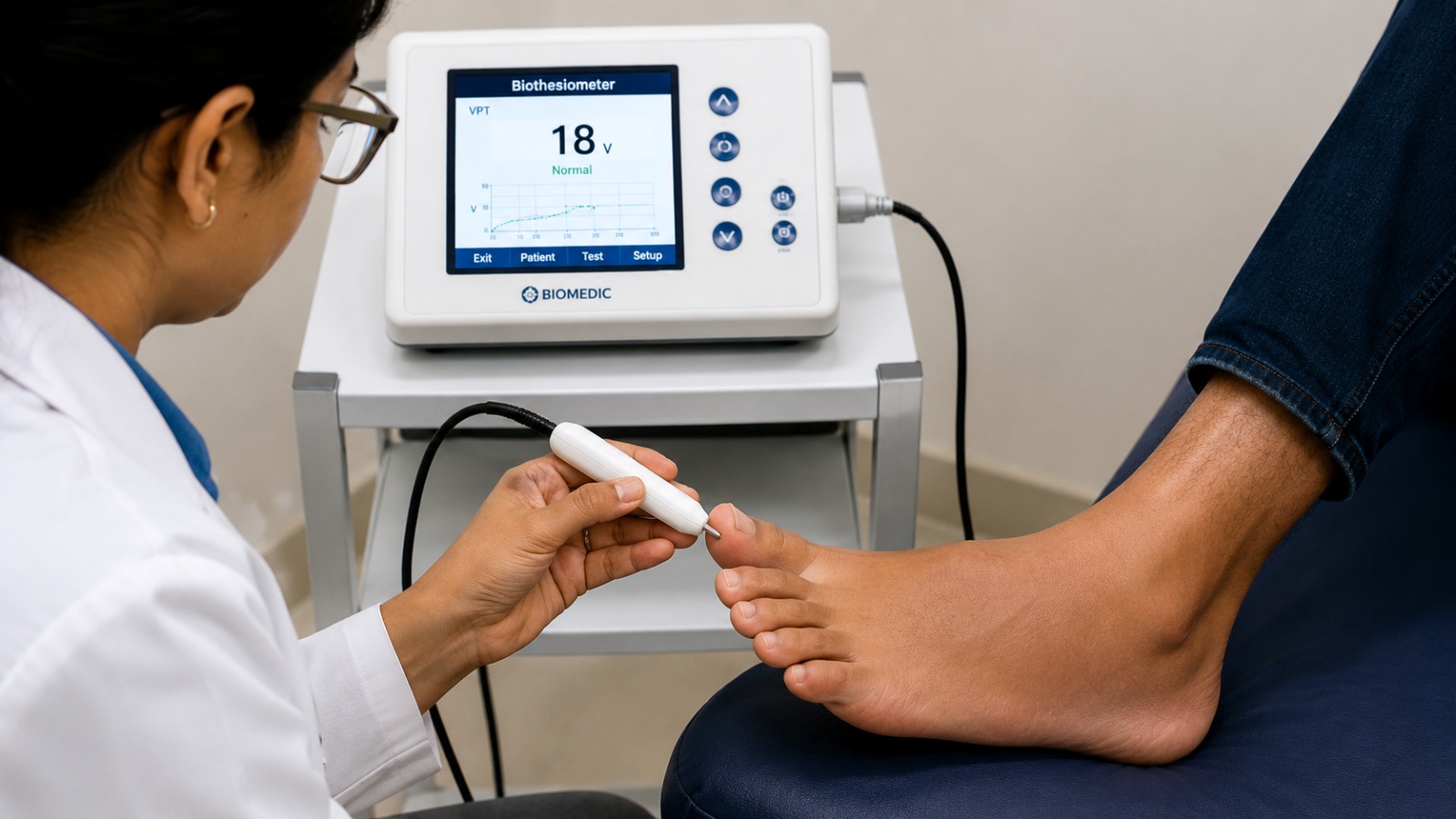
Biothesiometry Explained: Testing for Nerve Damage
Diabetologist | Metabolic & Obesity Physician
Comprehensive Diabetes & Metabolic Care Center, Chitradurga
Diabetes can affect the nerves over time, particularly the nerves in the feet and legs. This condition, known as diabetic peripheral neuropathy, may initially develop without obvious symptoms.
Biothesiometry is a simple, painless test that measures how well your nerves detect vibration. It is commonly used as part of diabetic foot assessment to identify reduced protective sensation and possible nerve damage before serious foot problems develop.
What Is Biothesiometry?
Biothesiometry is a non-invasive test that measures the vibration perception threshold (VPT). In simple terms, it determines the lowest level of vibration that a person can detect.
The test is particularly useful for identifying dysfunction of the larger sensory nerve fibers that carry vibration and other sensations from the feet to the brain.
Why Early Detection Matters
When diabetic neuropathy progresses, a person may gradually lose protective sensation in the feet. This can make it difficult to notice injuries, blisters, burns, or wounds, increasing the risk of infection and diabetic foot ulcers.
How Is a Biothesiometry Test Performed?
The test is usually quick and painless. A handheld device called a biothesiometer is used to deliver controlled vibration to selected areas of the skin.
Step 1: Position
You sit or lie comfortably while the healthcare professional explains the test.
Step 2: Sensor Placement
The vibrating probe is placed on specific areas, commonly the big toe, heel, or other points on the foot.
Step 3: Vibration
The device gradually increases the vibration intensity from a low level.
Step 4: Patient Response
You indicate when you first feel the vibration. The voltage level is recorded as your vibration perception threshold.
Step 5: Repeat Measurements
The measurement may be repeated at several sites to obtain a more reliable assessment of nerve sensation.
Understanding Biothesiometry Results
Vibration perception threshold values are expressed in volts. In general, a higher threshold means that a stronger vibration is required before the person can feel it, suggesting reduced vibration sensation.
| Vibration Perception Threshold | General Interpretation |
|---|---|
| Below 15 V | Generally considered within the normal range. |
| 15–24.9 V | May indicate reduced vibration sensation or mild neuropathy. |
| 25 V or higher | Suggests significant loss of vibration perception and increased neuropathy risk. |
These values should not be interpreted in isolation. Reference ranges and testing procedures can vary, and your doctor may combine biothesiometry results with other neurological and foot examinations.
Where Is Biothesiometry Used?
Diabetic Foot Screening
The most common use is assessing reduced vibration sensation in people with diabetes and identifying patients who may be at increased risk of foot complications.
Peripheral Neuropathy
It can help assess sensory nerve function in other conditions that cause peripheral neuropathy.
Hand Nerve Assessment
Vibration perception can also be assessed in the hands when certain peripheral nerve disorders are suspected.
Penile Sensory Testing
In selected men with erectile dysfunction, vibration perception testing may be used to assess penile sensory nerve function, particularly when diabetes or nerve injury is suspected.
Advantages of Biothesiometry
- Quick and generally painless.
- Non-invasive and does not require needles or blood samples.
- Can be performed in an outpatient or clinic setting.
- Provides a numerical measurement of vibration perception.
- Can help identify reduced sensation before a patient develops obvious foot symptoms.
- Useful as part of a comprehensive diabetic foot assessment.
What Are the Limitations?
Biothesiometry is useful, but it does not provide a complete assessment of every type of nerve damage. It primarily evaluates vibration perception and larger sensory nerve fibers.
Does Not Fully Assess Small Fibers
Small nerve fibers responsible for pain and temperature sensation may be affected even when vibration perception is relatively preserved.
Does Not Replace Other Tests
Doctors may also use a 10-g monofilament test, pinprick or temperature assessment, reflex testing, and nerve conduction studies when appropriate.
Results Need Clinical Context
Age, testing technique, patient response, and other medical conditions can influence the interpretation of results.
Why Diabetic Foot Screening Matters
Loss of sensation can be particularly dangerous in people with diabetes because a small injury may go unnoticed. Without early treatment, a minor wound can become infected and develop into a serious diabetic foot ulcer.
Regular foot examinations, good blood sugar control, appropriate footwear, daily foot inspection, and prompt treatment of wounds are important parts of preventing complications.
Do Not Wait for Numbness
Diabetic neuropathy can develop gradually, and some people may have significant nerve damage without realizing it. Regular screening can identify reduced sensation early and allow preventive measures to begin sooner.
Frequently Asked Questions
Is biothesiometry painful?
No. Biothesiometry is a non-invasive test that uses vibration and does not involve needles or injections.
Does a high biothesiometry value mean nerve damage?
A higher vibration perception threshold generally indicates reduced vibration sensation and may suggest peripheral neuropathy. Your doctor should interpret the result along with your clinical examination.
Is biothesiometry only for people with diabetes?
No. Although it is widely used in diabetic foot assessment, vibration perception testing can also be useful when other peripheral nerve disorders are suspected.
Can diabetic neuropathy be reversed?
Early intervention can help slow or prevent progression. Good glucose control, management of cardiovascular risk factors, regular foot care, exercise, and treatment of symptoms are important parts of neuropathy management.
How often should people with diabetes have their feet checked?
The frequency depends on your diabetes duration, symptoms, previous foot problems, and neuropathy risk. Your doctor can recommend an appropriate screening schedule.
A Message from Dr. Prashanth G
Biothesiometry is a simple test, but the information it provides can be extremely valuable for people living with diabetes. Detecting reduced sensation early gives us an opportunity to focus on better foot care and prevent avoidable complications.
If you have diabetes, do not wait until you develop severe numbness, burning, or a foot wound before getting your nerves and feet assessed. Regular screening should be part of comprehensive diabetes care.
Good blood sugar control, regular foot examinations, appropriate footwear, and early treatment of any foot injury can go a long way toward protecting your feet and maintaining your quality of life.