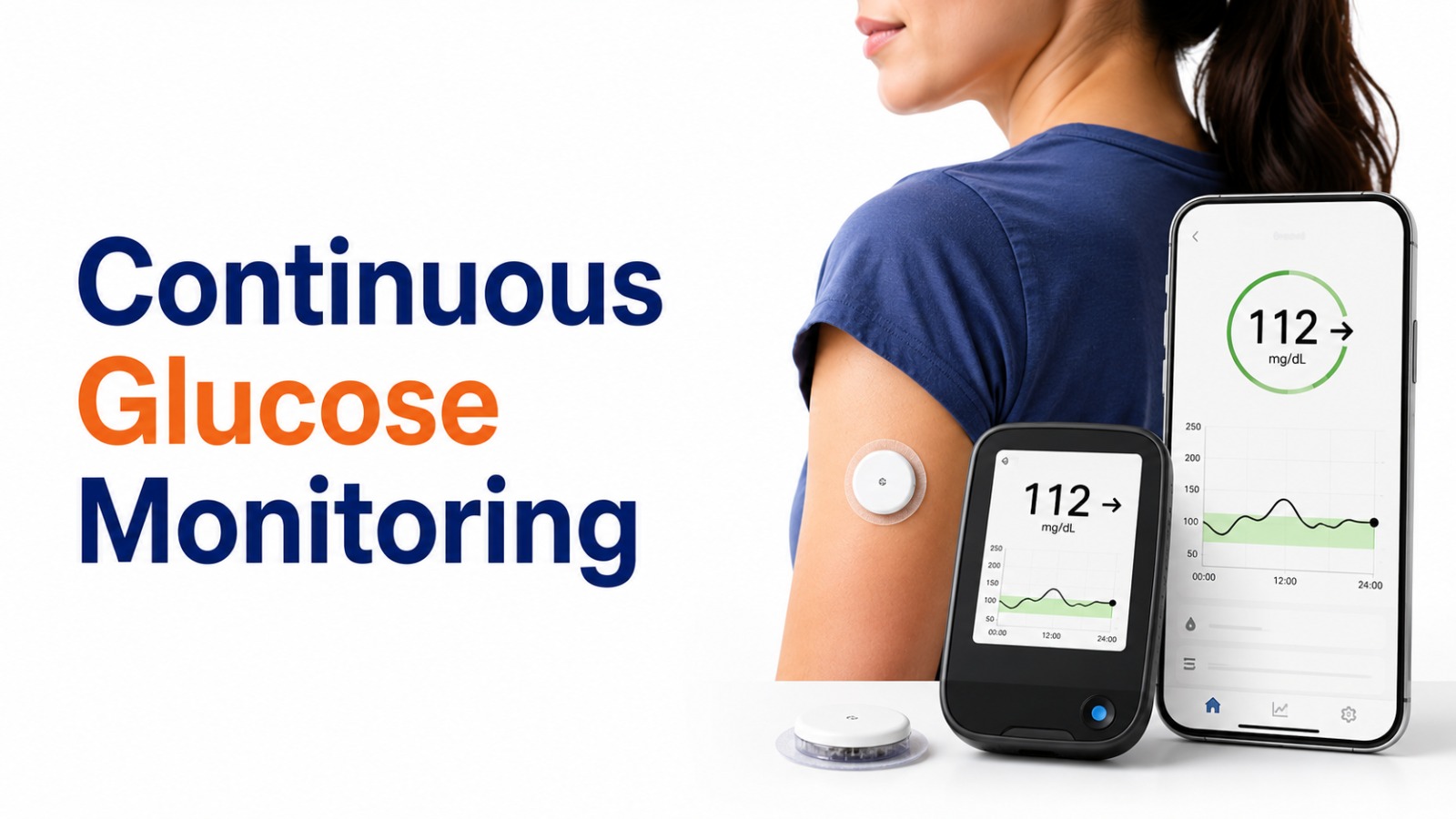
CGMS Explained: How Continuous Glucose Monitoring Works
Diabetologist | Metabolic & Obesity Physician
Comprehensive Diabetes & Metabolic Care Center, Chitradurga
A Continuous Glucose Monitoring System (CGMS or CGM) is a wearable device that continuously measures glucose levels throughout the day and night. Instead of giving a single blood sugar reading like a finger-prick test, a CGM provides a complete picture of how your glucose changes every few minutes.
This real-time information helps people with diabetes understand how food, exercise, medications, stress, illness, and sleep affect their glucose levels, making diabetes management more accurate and personalized.
The Three Main Parts of a CGM
Sensor
A tiny, flexible sensor is placed just beneath the skin, usually on the back of the upper arm or abdomen. It measures glucose levels in the interstitial fluid surrounding your body's cells.
Transmitter
The transmitter attaches to the sensor and converts glucose measurements into digital signals, sending the data wirelessly to your smartphone or receiver using Bluetooth technology.
Receiver or Mobile App
The receiver or smartphone app displays your current glucose level, trend arrows, glucose graphs, alerts for high and low glucose, and detailed reports.
Sensor Replacement
Most CGM sensors are replaced every 10–14 days, while the reusable transmitter may last several months depending on the manufacturer.
How Does the Sensor Measure Glucose?
Unlike a finger-prick test, a CGM does not measure glucose directly in the bloodstream. Instead, it measures glucose in the interstitial fluid, the fluid that surrounds your body's cells.
Glucose naturally moves from the bloodstream into this fluid. Because of this, CGM readings closely reflect blood glucose levels, although there is usually a small delay of about 5–10 minutes, especially when glucose levels are changing rapidly.
The sensor contains an enzyme called glucose oxidase, which reacts with glucose molecules. This chemical reaction generates a tiny electrical signal that is converted into digital glucose readings by the transmitter and sent to your device every 1–5 minutes.
What Information Does a CGM Show?
| Feature | What It Means |
|---|---|
| Current Glucose Value | Displays your present glucose level (for example, 112 mg/dL). |
| Trend Arrow | Shows whether glucose is rising, falling, or remaining stable. |
| Glucose Graph | Displays glucose patterns over the past 24 hours or longer. |
| High and Low Alerts | Warns you before or when glucose becomes too high or too low. |
| Time in Range (TIR) | Shows the percentage of time your glucose stays within the target range, commonly 70–180 mg/dL. Many diabetes guidelines recommend aiming for at least 70% Time in Range. |
How CGM Improves Diabetes Management
Real-Time Feedback
Instantly see how meals, exercise, stress, illness, and medications affect your glucose.
Identify Glucose Patterns
Recognize overnight lows, morning glucose rises (dawn phenomenon), and after-meal spikes.
Early Warning System
Receive alerts before dangerous high or low glucose levels develop, improving safety.
Better Treatment Decisions
Your healthcare team can use CGM reports to adjust insulin doses, medications, meal timing, and lifestyle recommendations.
Who Can Benefit from a CGM?
- People living with Type 1 Diabetes.
- People with Type 2 Diabetes using insulin or medications that may cause hypoglycemia.
- Individuals with frequent low blood sugar episodes or hypoglycemia unawareness.
- People experiencing large glucose fluctuations.
- Pregnant women with diabetes or gestational diabetes under specialist supervision.
- Some people with Type 2 Diabetes not using insulin who want detailed feedback about food, exercise, and lifestyle changes.
Important Things to Remember
CGM Complements Finger-Prick Testing
Because CGMs measure glucose in interstitial fluid, readings may briefly lag behind blood glucose during rapid changes. If your symptoms do not match the reading or your device recommends confirmation, perform a finger-prick blood glucose test.
- CGMs significantly reduce—but may not completely eliminate—the need for finger-prick testing.
- Proper sensor placement and skin care improve accuracy.
- Understanding trend arrows is just as important as knowing the glucose number.
- Regular review of CGM reports helps improve long-term diabetes management.
Frequently Asked Questions
Does a CGM measure blood glucose directly?
No. It measures glucose in the interstitial fluid beneath the skin, which closely reflects blood glucose with a small time delay.
Do I still need finger-prick testing?
Sometimes. Finger-prick testing may be needed if symptoms do not match CGM readings, during rapid glucose changes, or if your healthcare provider recommends confirmation.
How often does a CGM update glucose readings?
Most CGM systems record and display glucose values every 1 to 5 minutes throughout the day and night.
How long does a CGM sensor last?
Most sensors are replaced every 10–14 days, depending on the specific device.
A Message from Dr. Prashanth G
Continuous Glucose Monitoring has transformed diabetes care by providing much more than a single glucose reading. It reveals trends, patterns, and hidden fluctuations that help patients and doctors make smarter treatment decisions.
Whether you have Type 1 Diabetes, Type 2 Diabetes, or are using insulin therapy, a CGM can provide valuable insights into how your body responds to food, exercise, medications, and daily activities.
If you are considering a CGM, speak with your diabetologist to determine which system best fits your medical needs, lifestyle, and budget, and learn how to interpret the information safely for better diabetes control.