Diabetic Neuropathy: Why Your Feet Feel Numb or Tingly
Numbness, tingling, burning, or “pins and needles” in the feet can be a sign of diabetic peripheral neuropathy—nerve damage caused by diabetes.
Diabetic peripheral neuropathy usually begins in the toes and feet and may gradually move upward into the legs. It can occur even when symptoms are mild or absent at first.
What is diabetic neuropathy?
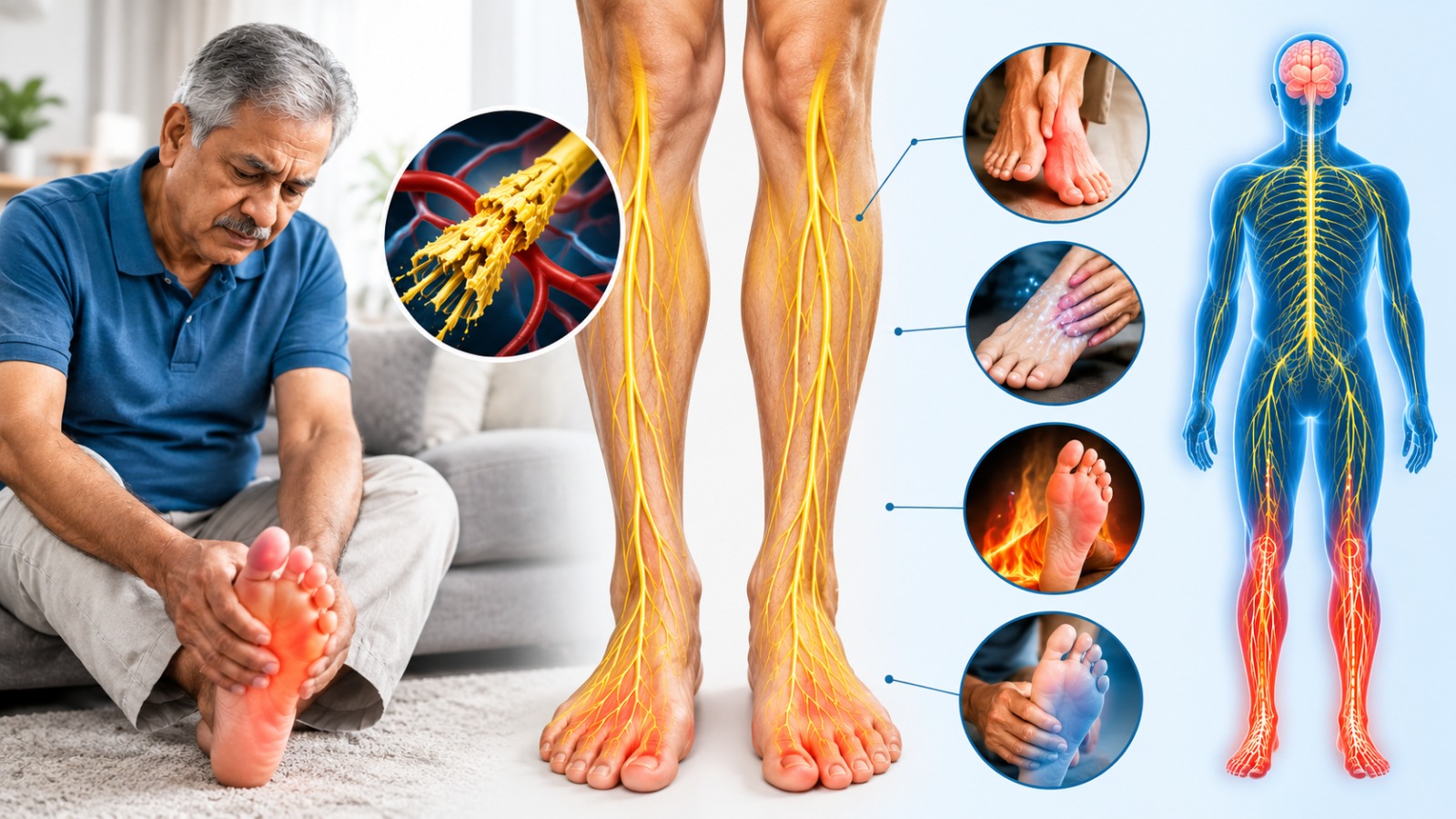
Diabetic neuropathy is damage or dysfunction of nerves caused by diabetes. The most common form is peripheral neuropathy, which affects the longest nerves first—usually those supplying the feet and lower legs.
High glucose levels over time, along with high blood fats such as triglycerides, can injure nerves and the small blood vessels that supply them with oxygen and nutrients. When nerve cells do not receive enough support, their function can decline.
Why Your Feet Feel Strange
Neuropathy does not feel the same for everyone. Typical symptoms include:
- Tingling or a pins-and-needles sensation.
- Numbness or reduced ability to feel touch, heat, cold, or pain.
- Burning, stabbing, electric-shock-like, or shooting pain.
- Increased sensitivity—even light bed sheets may feel painful.
- A feeling that the feet are unusually hot or cold.
- Weakness, unsteadiness, or balance problems.
Symptoms often worsen at night. Some people experience painful feet, while others gradually lose sensation. Both can be signs of nerve damage.
Why Numbness Can Be Dangerous
Pain normally tells us to protect an injured area. With neuropathy, you may not feel a stone in your shoe, a tight strap, a blister, a cut, or a burn from hot water.
Loss of protective sensation can allow small injuries to become ulcers or serious infections before they are noticed. Diabetes can also reduce blood flow to the feet, making wounds slower to heal.
Who Is More Likely to Develop It?
Having no foot symptoms does not guarantee that your nerves are healthy. A clinician can detect early changes through a foot and neurological examination.
How Doctors Check for Diabetic Neuropathy
A clinician may examine the feet for skin changes, ulcers, deformities, pulses, reflexes, muscle strength, and sensation.
Common tests include:
- 10-g monofilament: assesses protective sensation.
- Vibration testing: using a tuning fork or biothesiometry.
- Pinprick and temperature testing: checks different sensory functions.
- Pulse examination: helps assess circulation.
Can Diabetic Neuropathy Be Treated?
Existing nerve damage may not be completely reversible, but its progression can often be slowed and symptoms can be managed.
A key part of treatment is keeping glucose as close to your individual target as safely possible while also managing blood pressure, cholesterol, and triglycerides.
For painful or burning neuropathy, doctors may prescribe medicines specifically for nerve pain. Treatment should be individualized, particularly for older adults and people taking multiple medicines.
Regular physical activity, not smoking, balanced nutrition, and physical therapy or balance exercises may also support mobility and reduce the risk of falls.
Daily Foot Protection
Make these habits part of your diabetes routine:
- Check both feet every day, including the soles and between the toes.
- Use a mirror or ask someone for help if you cannot see the bottom of your feet.
- Wash your feet with lukewarm—not hot—water.
- Dry carefully, especially between the toes.
- Moisturize dry skin, but avoid applying lotion between the toes.
- Never walk barefoot, including at home.
- Wear clean socks and well-fitting shoes.
- Check inside your shoes before putting them on.
- Do not cut corns or calluses yourself.
- Do not use chemical corn removers without medical advice.
- Have thick calluses or problematic toenails managed safely by a trained clinician when needed.
When to Seek Medical Attention
Contact a clinician promptly if you notice:
- A cut, blister, or sore.
- Redness, swelling, or warmth.
- Drainage from a wound.
- Changes in skin color.
- A wound that is not healing.
Seek urgent medical care for black or blue skin, fever with a foot wound, rapidly spreading redness, or severe new pain.
Bottom Line
Tingling and numb feet are not something to ignore in diabetes. They may indicate diabetic peripheral neuropathy, which can progress silently and increase the risk of ulcers and infections. Good glucose management, regular foot examinations, daily inspection, protective footwear, and early treatment of foot problems can help protect your feet and mobility.
Have diabetes and experiencing numbness, tingling, or burning in your feet?