Continuous Glucose Monitoring (CGM): 10 Powerful Facts You Need to Know
Diabetologist | Metabolic & Obesity Physician
Comprehensive Diabetes & Metabolic Care Center, Chitradurga
Managing diabetes is no longer limited to occasional finger-prick blood sugar tests. Continuous Glucose Monitoring (CGM) has transformed diabetes care by providing real-time information about glucose levels throughout the day and night.
CGM helps people understand how food, exercise, stress, sleep, illness, and medications affect blood sugar. With this information, better day-to-day decisions can be made, leading to improved diabetes management and fewer unexpected glucose fluctuations.
What is Continuous Glucose Monitoring (CGM)?
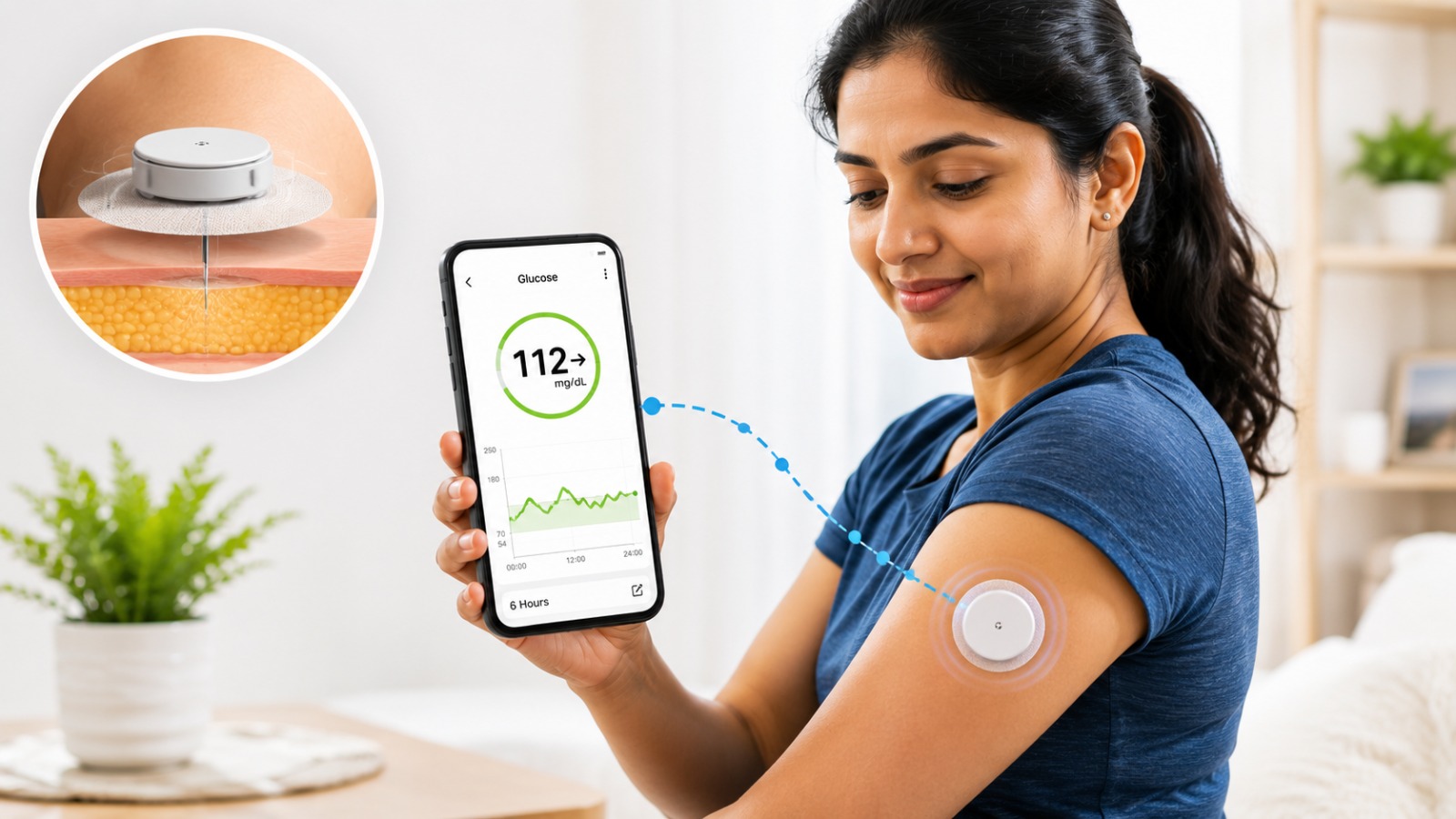
Continuous Glucose Monitoring (CGM) is a small wearable device that measures glucose levels continuously throughout the day and night. A tiny sensor placed just beneath the skin checks glucose levels in the tissue fluid and sends the information to a receiver or smartphone.
Instead of showing only one blood sugar value, CGM displays how glucose changes over time, helping people recognize patterns and trends.
10 Important Facts About CGM
1. CGM Shows Trends, Not Just Numbers
Unlike a single blood sugar test, CGM shows whether glucose is rising, falling, or remaining stable, helping prevent unexpected highs and lows.
2. It Can Help Prevent Highs and Lows
Many CGM devices provide alerts before glucose becomes dangerously high or low, allowing timely action.
3. Fewer Finger Pricks
CGM can reduce the need for frequent finger-stick testing, although occasional confirmation may still be necessary.
4. It Measures Tissue Glucose
CGM measures glucose in the fluid beneath the skin rather than directly from the bloodstream, so readings may lag by a few minutes.
5. Sensors Last Several Days
Most CGM sensors remain effective for 7 to 14 days before they need replacement, depending on the device.
6. Better Diabetes Control
Studies show CGM can improve HbA1c, reduce episodes of hypoglycemia, and increase the time glucose stays within the target range.
7. Understand Food and Lifestyle
CGM shows how meals, exercise, stress, illness, and sleep affect glucose levels, making diabetes care more personalized.
8. Detect Hidden Glucose Changes
CGM helps identify overnight lows, post-meal spikes, and glucose fluctuations that routine testing may miss.
9. Easy Data Sharing
Many CGM systems allow glucose data to be shared with doctors, caregivers, or family members for better treatment decisions.
10. Helpful, But Not Perfect
CGM may occasionally give inaccurate readings or cause skin irritation. In some situations, a finger-prick blood sugar test is still recommended.
Who Can Benefit from CGM?
- People living with Type 1 Diabetes.
- People with Type 2 Diabetes using insulin.
- Individuals who experience frequent low blood sugar episodes.
- Pregnant women with diabetes who require close glucose monitoring.
- People with difficult-to-control blood sugar levels.
- Anyone who wants a better understanding of daily glucose patterns.
Why CGM is Changing Diabetes Care
Traditional glucose testing provides only a snapshot of your blood sugar at one moment. CGM offers a complete picture by showing what happens before meals, after eating, during exercise, while sleeping, and even during stressful situations.
This information allows doctors to personalize treatment plans and helps people with diabetes make informed decisions about food, activity, and medications.
Real-Time Information Leads to Better Decisions
Understanding glucose trends can improve confidence, reduce unexpected highs and lows, increase time spent within the target glucose range, and support better long-term diabetes management.
A Message from Dr. Prashanth G
Continuous Glucose Monitoring is more than just a modern medical device. It is a valuable tool that helps people understand their body's glucose patterns and make healthier everyday choices.
While CGM offers many benefits, it should always be used as part of a comprehensive diabetes care plan that includes healthy eating, regular physical activity, prescribed medications, and regular medical follow-up.
If you are living with diabetes or would like to know whether CGM is suitable for you, consult a diabetologist to discuss the best monitoring option for your individual needs.