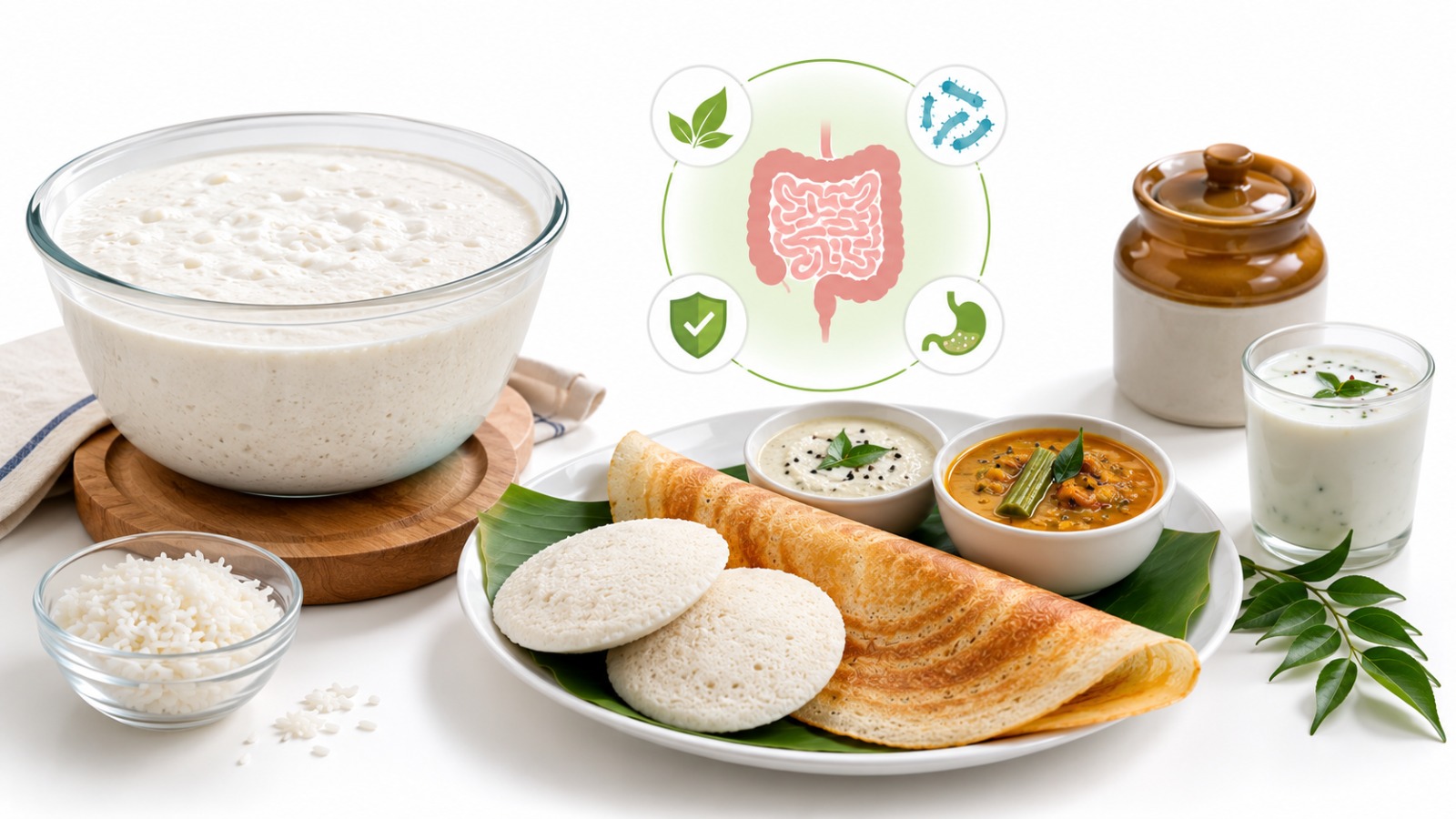
Fermented Foods Like Idli and Dosa Batter: Gut Health Benefits for Diabetics
Diabetologist | Metabolic & Obesity Physician
Comprehensive Diabetes & Metabolic Care Center, Chitradurga
Traditional Indian fermented foods such as idli and dosa have been enjoyed for generations. Besides their delicious taste, these foods offer several health benefits, especially when included as part of a balanced diet for people with diabetes.
Fermentation improves digestion, enhances nutrient absorption, and may slightly reduce the glycemic impact of food. However, portion size, ingredients, and meal combinations remain important for maintaining healthy blood sugar levels.
How Does Fermentation Work?
Idli and dosa batter is traditionally prepared by fermenting a mixture of rice and urad dal. During fermentation, naturally occurring beneficial bacteria and yeast break down some of the starches and produce beneficial compounds that improve both digestion and nutrition.
Better Digestion
Fermentation partially breaks down carbohydrates and proteins, making idli and dosa easier to digest than unfermented grain-based foods.
Improved Nutrient Absorption
The fermentation process increases the availability of important minerals such as iron and zinc while improving certain B vitamins.
Supports Gut Microbiome
Fermented foods encourage a healthier balance of gut bacteria, which plays an important role in metabolism, immunity, and overall health.
Benefits for People with Diabetes
Gentler Blood Sugar Response
Fermentation may slightly reduce the glycemic index compared with similar non-fermented rice preparations, helping slow the rise in blood glucose.
Healthier Digestion
Many people with diabetes experience digestive discomfort. Fermented foods are often easier to digest and may reduce bloating.
Improved Nutritional Quality
Fermentation increases the availability of vitamins and minerals while improving protein digestibility.
Potential Metabolic Benefits
Research suggests fermented foods may contribute to improved fasting glucose, HbA1c, insulin sensitivity, and reduced inflammation when consumed as part of a healthy diet.
Important Things to Remember
Fermentation Does Not Remove Carbohydrates
Although fermentation improves digestion and may modestly lower the glycemic response, idli and dosa are still carbohydrate-rich foods. Large portions can still raise blood sugar levels, especially when prepared mainly with polished white rice.
Generally, dosa may have a slightly higher glycemic effect than idli because it is thinner, contains less moisture, and is often eaten in larger portions.
How to Make Idli and Dosa More Diabetes-Friendly
| Healthy Practice | Why It Helps |
|---|---|
| Use More Dal | Increasing the proportion of urad dal improves protein content and lowers the overall glycemic impact. |
| Add Millets or Whole Grains | Replacing part of the white rice with ragi, jowar, bajra, foxtail millet, or brown rice increases fiber and nutrients. |
| Eat with Sambar | Sambar provides protein, fiber, vegetables, and helps reduce the meal's glycemic load. |
| Choose Healthy Chutneys | Coconut, peanut, mint, coriander, and tomato chutneys prepared without excess sugar make healthier accompaniments. |
| Watch Portion Size | Moderate portions are still essential for maintaining healthy blood glucose levels. |
| Monitor Your Own Response | Individual glucose responses differ. Using a glucometer or CGM can help identify your ideal portion size. |
Why Gut Health Matters in Diabetes
The gut microbiome contains trillions of beneficial bacteria that influence digestion, immunity, inflammation, and blood sugar regulation. Growing research shows that maintaining a healthy gut microbiome may improve insulin sensitivity and overall metabolic health.
Fermented foods contribute beneficial microorganisms and fermentation by-products that support gut health. However, they work best when combined with a diet rich in vegetables, fruits, pulses, legumes, whole grains, and dietary fiber.
Frequently Asked Questions
Can people with diabetes eat idli every day?
Yes. Idli can be part of a healthy diabetes meal plan when eaten in moderate portions and paired with protein-rich foods such as sambar.
Is dosa healthier than idli?
Both can be healthy choices. However, idli generally has a slightly lower glycemic impact because it contains more moisture and is steamed rather than pan-cooked.
Can millets improve blood sugar control?
Replacing part of the rice with millets or whole grains increases fiber and may help reduce post-meal glucose spikes.
Does fermentation cure diabetes?
No. Fermented foods support healthy digestion and may modestly improve blood sugar responses, but they do not cure diabetes. Overall diet, physical activity, medications, and regular monitoring remain essential.
A Message from Dr. Prashanth G
Traditional fermented foods like idli and dosa can be an excellent addition to a diabetes-friendly Indian diet when prepared thoughtfully and eaten in appropriate portions.
Simple modifications—such as adding more dal, incorporating millets, eating with sambar, increasing vegetables, and practicing portion control—can significantly improve their nutritional value and blood sugar response.
Healthy eating is not about eliminating traditional foods. It is about making smarter choices that support long-term glucose control, gut health, and overall well-being.