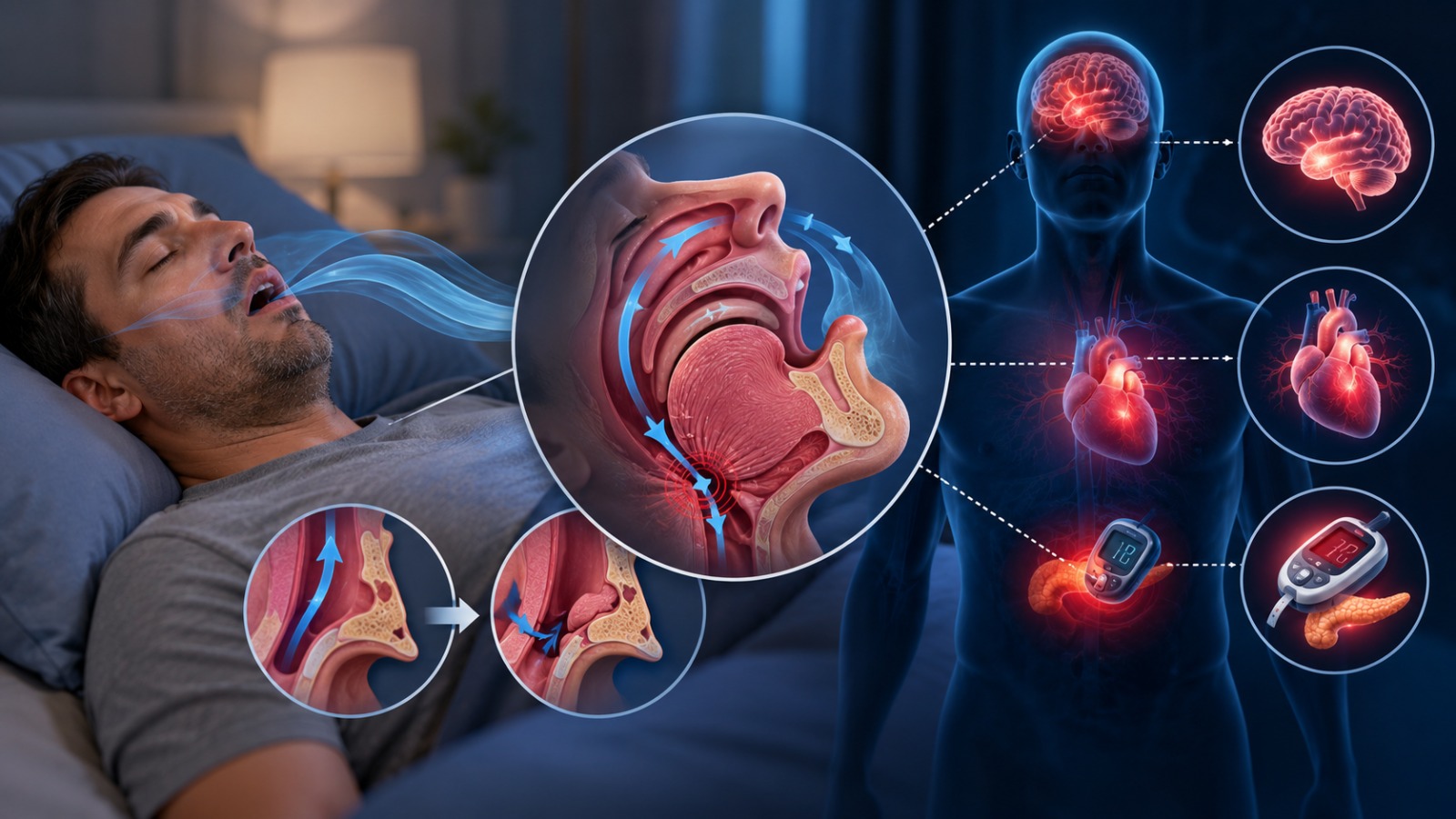
Sleep Apnea: More Than Just Snoring
Diabetologist | Metabolic & Obesity Physician
Comprehensive Diabetes & Metabolic Care Center, Chitradurga
Many people think loud snoring is harmless, but it can sometimes be a warning sign of sleep apnea—a serious sleep disorder in which breathing repeatedly stops and starts during sleep. These interruptions may occur dozens or even hundreds of times every night, reducing oxygen levels and preventing restful sleep.
Untreated sleep apnea increases the risk of high blood pressure, heart disease, stroke, obesity, insulin resistance, and Type 2 Diabetes. Fortunately, it is highly treatable when diagnosed early.
What Is Sleep Apnea?
Sleep apnea occurs when normal breathing is interrupted during sleep. Depending on the cause, it is classified into three main types.
Obstructive Sleep Apnea (OSA)
The most common type. The airway becomes partially or completely blocked because the throat muscles relax or excess tissue narrows the airway.
Central Sleep Apnea
The brain temporarily fails to send proper signals to the breathing muscles, causing breathing pauses without any airway blockage.
Complex Sleep Apnea
A combination of obstructive and central sleep apnea requiring specialized evaluation and treatment.
Common Symptoms
Night-Time Symptoms
- Loud, persistent snoring.
- Breathing pauses noticed by a partner.
- Choking or gasping during sleep.
- Restless sleep and frequent awakenings.
- Dry mouth on waking.
Day-Time Symptoms
- Excessive daytime sleepiness.
- Morning headaches.
- Poor concentration and memory.
- Irritability and mood changes.
- Reduced work performance.
Many People Don't Know They Have It
People with sleep apnea often fall asleep easily because they are sleep deprived. In many cases, a spouse or family member is the first person to notice loud snoring or repeated breathing pauses.
Who Is at Higher Risk?
| Risk Factor | How It Increases Risk |
|---|---|
| Obesity | Extra fat around the neck narrows the airway during sleep. |
| Large Neck Circumference | Reduces airway size and increases collapse during sleep. |
| Age | Risk increases with age but can occur at any age. |
| Family History | Inherited airway anatomy and genetics increase susceptibility. |
| Alcohol & Sedatives | Relax throat muscles and worsen airway obstruction. |
| Smoking | Causes airway inflammation and swelling. |
| Large Tonsils or Nasal Blockage | Reduce airflow, especially in children and young adults. |
Why Sleep Apnea Is Dangerous
Every breathing pause briefly lowers oxygen levels and places stress on the heart and blood vessels. Over time, this significantly increases the risk of several serious health conditions.
Heart Disease
Raises the risk of heart attack, irregular heart rhythm, heart failure, and stroke.
High Blood Pressure
Repeated oxygen deprivation activates stress hormones that increase blood pressure.
Diabetes & Insulin Resistance
Poor sleep contributes to insulin resistance and makes blood sugar harder to control.
Weight Gain
Hormonal changes caused by poor sleep increase hunger and make weight loss more difficult.
Mental Health
Untreated sleep apnea is linked to depression, anxiety, poor concentration, and memory problems.
Accidents
Excessive daytime sleepiness increases the risk of workplace and road traffic accidents.
How Is Sleep Apnea Diagnosed?
- Home Sleep Study: A portable monitor records breathing, oxygen levels, and airflow while you sleep at home.
- Polysomnography (Sleep Lab Test): A detailed overnight sleep study that measures breathing, oxygen levels, brain waves, heart rate, and limb movements.
These tests help determine the severity of sleep apnea and guide the most appropriate treatment.
Treatment Options
Lifestyle Changes
Weight loss, regular exercise, sleeping on your side, quitting smoking, and avoiding alcohol before bedtime can significantly improve mild sleep apnea.
CPAP Therapy
Continuous Positive Airway Pressure (CPAP) is the gold standard treatment for moderate to severe obstructive sleep apnea. It keeps the airway open throughout the night.
Oral Appliances
Custom mandibular advancement devices move the lower jaw forward to improve airflow and are useful for selected patients.
Surgery
Some patients benefit from surgery to remove enlarged tonsils, improve airway anatomy, or correct structural abnormalities.
Advanced Therapies
Selected patients may benefit from hypoglossal nerve stimulation, positional therapy, or bariatric surgery for severe obesity.
When Should You See a Doctor?
Seek Medical Advice If You Have:
- Loud snoring most nights.
- Breathing pauses noticed by family members.
- Gasping or choking during sleep.
- Excessive daytime sleepiness.
- Morning headaches or poor concentration.
- High blood pressure, obesity, diabetes, or heart disease along with poor-quality sleep.
Frequently Asked Questions
Is snoring always sleep apnea?
No. Many people snore without having sleep apnea, but loud snoring accompanied by breathing pauses, choking, or excessive daytime sleepiness should always be evaluated.
Can sleep apnea cause diabetes?
Sleep apnea does not directly cause diabetes, but it increases insulin resistance and makes blood sugar more difficult to control, raising the risk of Type 2 Diabetes.
Can losing weight improve sleep apnea?
Yes. Weight loss is one of the most effective lifestyle treatments and can significantly reduce the severity of obstructive sleep apnea in many people.
Is CPAP safe?
Yes. CPAP is considered the most effective and safest treatment for moderate to severe obstructive sleep apnea and has been shown to improve sleep quality, energy levels, and cardiovascular health.
A Message from Dr. Prashanth G
Sleep apnea is far more than just loud snoring. It is a serious but highly treatable condition that affects your heart, metabolism, blood pressure, brain, and overall quality of life. Early diagnosis can dramatically improve sleep, energy, concentration, and long-term health.
If you or your family notice loud snoring, repeated breathing pauses, or excessive daytime sleepiness, do not ignore these warning signs. A simple sleep evaluation may identify a condition that can be effectively treated.
Better sleep is an essential part of better diabetes control, healthier weight management, and long-term cardiovascular protection.