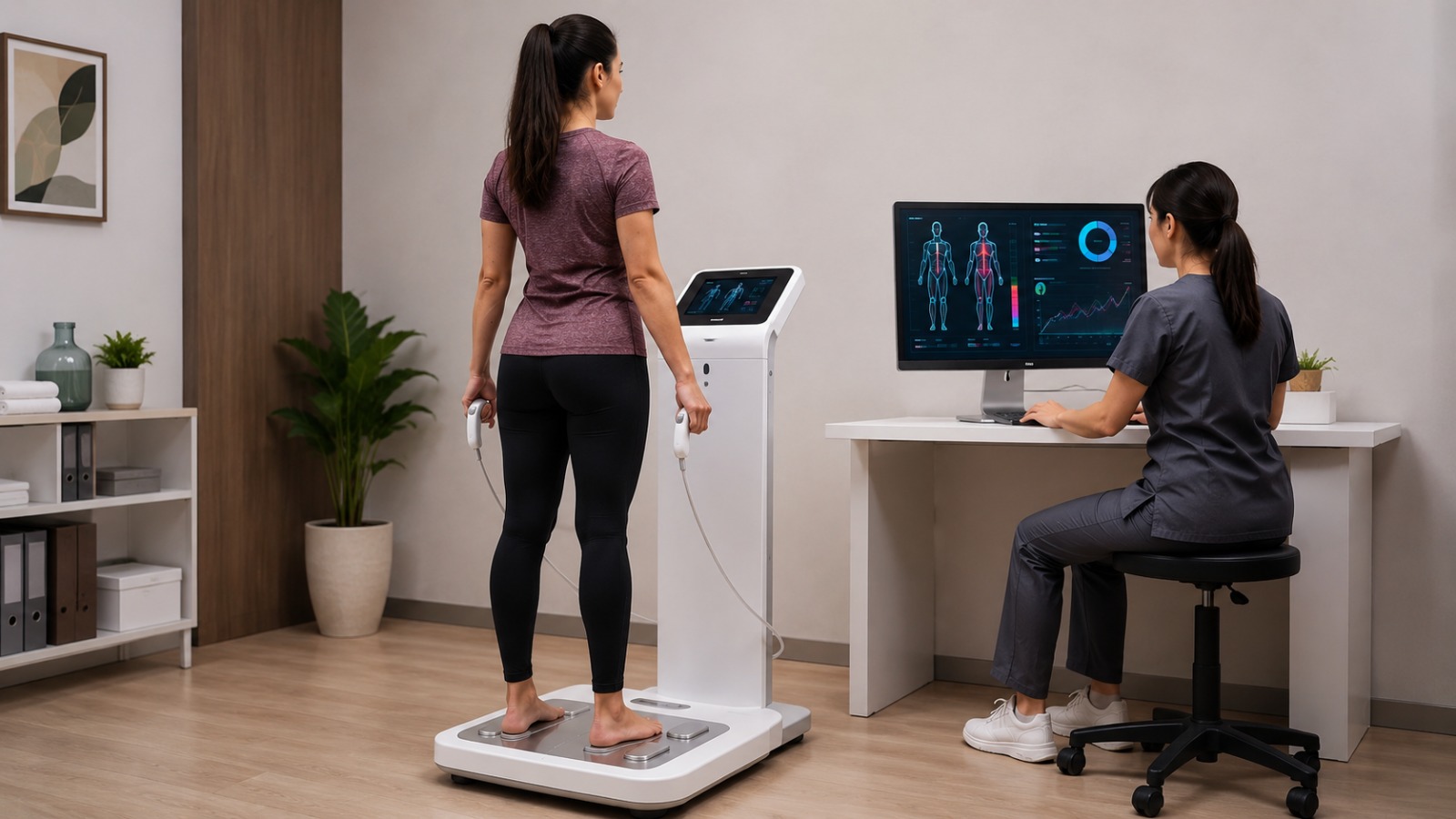
Understanding BIA (Body Composition Analysis)
Diabetologist | Metabolic & Obesity Physician
Comprehensive Diabetes & Metabolic Care Center, Chitradurga
When you step on a weighing scale, you get one number: your body weight. But that number does not tell you whether the weight comes from muscle, fat, water, or other tissues.
Bioelectrical Impedance Analysis (BIA) is a quick, non-invasive method that estimates your body composition. It provides a more detailed picture of your health by looking beyond body weight and BMI.
BIA can be particularly useful in obesity management, diabetes care, nutrition, fitness, and monitoring changes in muscle and body fat over time.
How Does BIA Work?
During a BIA assessment, the device sends a very small electrical current through the body. The current is painless and is not normally felt. The machine measures how strongly the body resists the electrical current, a measurement known as bioelectrical impedance.
Lean Tissue
Muscle and other lean tissues contain relatively more water and electrolytes, allowing electrical current to pass through them more easily.
Body Fat
Fat tissue contains less water and offers greater resistance to the electrical current.
Body Water
Because body water strongly influences electrical conductivity, hydration status can affect BIA measurements.
The device combines impedance measurements with information such as height, weight, age, and sex to estimate different components of body composition.
What Does a BIA Report Show?
Body Fat Percentage
The estimated percentage of your total body weight that consists of fat.
Fat-Free Mass
The estimated weight of everything other than fat, including muscle, organs, bone, and body water.
Skeletal Muscle Mass
An estimate of the amount of muscle attached to your skeleton and involved in movement.
Total Body Water
An estimate of the amount of water in your body. Some advanced systems provide intracellular and extracellular water measurements.
Visceral Fat
Some devices estimate visceral fat, which is the fat stored around internal organs and is strongly associated with metabolic health.
Phase Angle
Some advanced BIA systems report phase angle, a measurement that can provide information related to cellular integrity and nutritional status.
Segmental Analysis
Advanced BIA machines may provide separate estimates for the arms, legs, and trunk. This can help identify differences in muscle mass and body fat distribution and monitor changes during a weight-management program.
Why Is BIA Useful?
Non-Invasive
BIA does not require needles, blood samples, or radiation.
Quick
Most assessments take only a few minutes, making BIA convenient for routine clinical monitoring.
Practical
It is generally more accessible and less expensive than advanced imaging techniques such as DEXA scans.
Tracks Progress
BIA can help monitor changes in body fat, muscle mass, and body water over time rather than focusing only on body weight.
Why Body Composition Matters in Diabetes and Obesity
Two people can have exactly the same body weight but very different amounts of muscle and body fat. This is one reason why body weight alone does not always tell the complete story.
Excess body fat, particularly visceral fat around the abdominal organs, is strongly associated with insulin resistance, Type 2 Diabetes, fatty liver disease, high blood pressure, and cardiovascular risk.
During weight loss, monitoring body composition can also help determine whether a person is losing primarily fat while preserving muscle mass.
Weight Loss Is Not Always the Same as Fat Loss
A lower number on the weighing scale does not necessarily mean that all the weight lost was body fat. Tracking body composition can provide additional information about the quality of weight loss.
Limitations of BIA
BIA is useful, but it is not a direct measurement of body fat or muscle. The results are estimates generated using device-specific equations and assumptions.
| Factor | Why It Matters |
|---|---|
| Hydration | Changes in body water can affect electrical conductivity and alter estimated body composition. |
| Recent Meals | Eating shortly before testing can influence measurements. |
| Exercise | Recent intense exercise can temporarily change fluid distribution and affect the result. |
| Alcohol | Alcohol can affect hydration and therefore influence BIA readings. |
| Device and Equations | Different machines use different technologies and prediction equations, so results from different devices may not be directly comparable. |
| Medical Conditions | Significant edema, fluid imbalance, and certain medical conditions can reduce the reliability of estimates. |
Focus on the Trend
A single BIA result should not be treated as an absolute measurement. BIA is generally more useful for tracking trends when testing conditions, equipment, and protocols remain consistent.
How to Get a More Consistent BIA Reading
- Try to test at approximately the same time of day each time.
- Morning measurements may be easier to standardize.
- Avoid heavy meals for several hours before testing.
- Avoid intense exercise shortly before the assessment.
- Avoid alcohol before testing.
- Maintain similar hydration habits between measurements.
- Use the same BIA machine whenever possible.
- Follow the same testing procedure during each assessment.
Frequently Asked Questions
Is BIA safe?
BIA uses a very small electrical current and is generally considered safe for most people. However, people with certain implanted electronic medical devices should check with their healthcare professional and follow the device manufacturer's recommendations before testing.
Is BIA better than BMI?
BIA provides more information than BMI because it estimates body fat and lean mass. However, both measurements have limitations and should be interpreted alongside clinical factors such as waist circumference and overall health.
Can BIA measure visceral fat accurately?
BIA devices can estimate visceral fat, but the result is not a direct measurement. Device-specific estimates should be interpreted as part of an overall health assessment.
Can BIA tell me whether I am losing muscle during weight loss?
It can help track changes in estimated muscle mass over time, especially when measurements are performed consistently under similar conditions. The results should be interpreted alongside body weight, strength, diet, and clinical assessment.
Should I compare BIA results from different machines?
It is better to use the same device and testing protocol when monitoring changes because different BIA machines may use different measurement technologies and prediction equations.
A Message from Dr. Prashanth G
Your weight tells only part of the story. Understanding how much of your body is fat, muscle, and water can provide a much clearer picture of metabolic health and the quality of your weight-management progress.
BIA is a practical tool that can help doctors and patients monitor these changes over time. However, the numbers should always be interpreted in context rather than treated as a diagnosis on their own.
If you are working on weight loss, managing diabetes, or trying to improve your metabolic health, body composition analysis can be a useful addition to regular measurements such as body weight, waist circumference, blood pressure, and blood sugar.