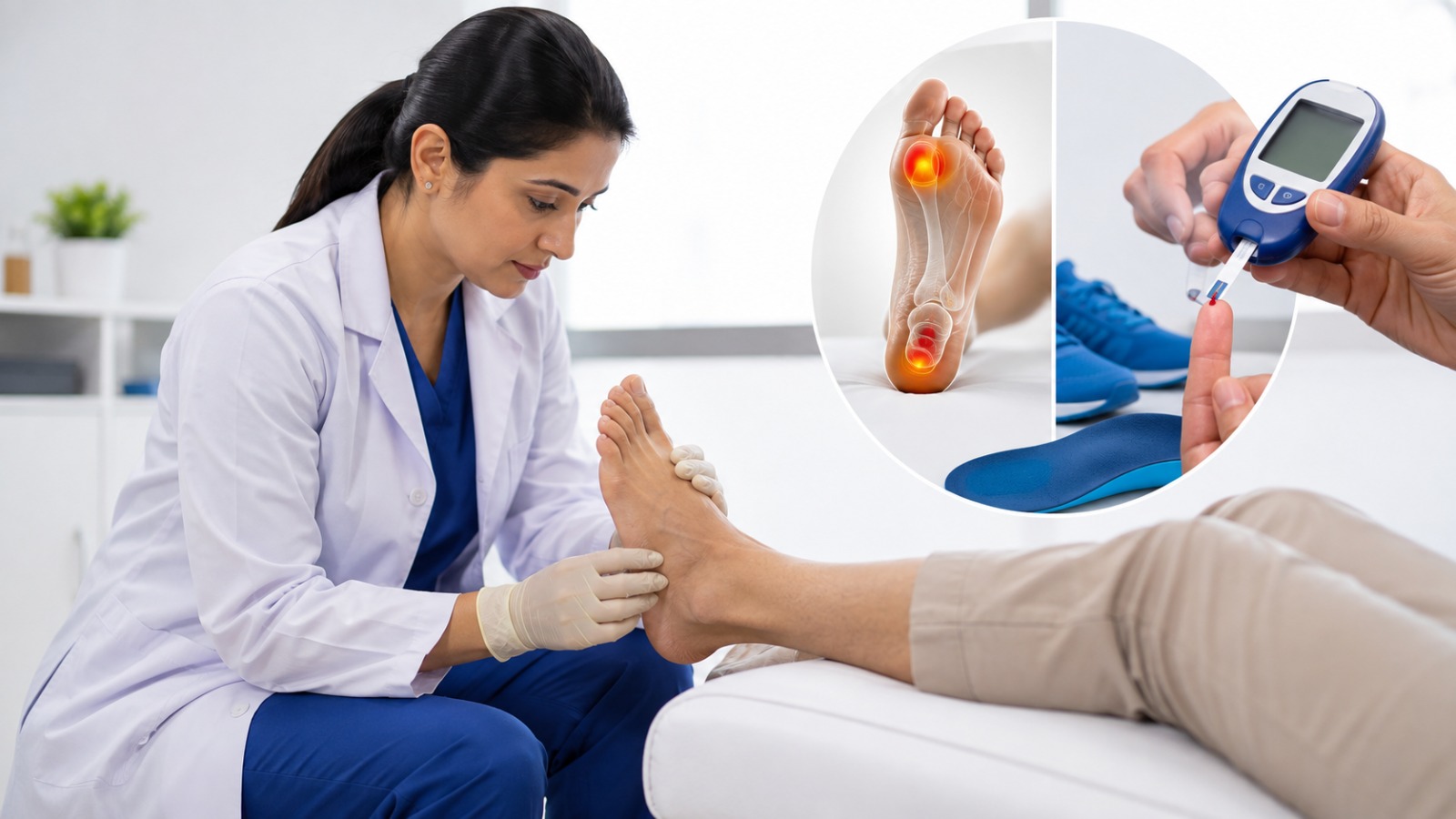
What Is Podiatry and Why Diabetics Need It
Diabetologist | Metabolic & Obesity Physician
Comprehensive Diabetes & Metabolic Care Center, Chitradurga
When you have diabetes, looking after your feet is not just about avoiding discomfort. Diabetes can gradually damage the nerves and blood vessels in your feet, making even a small cut or blister potentially serious.
Podiatry is the specialized field of healthcare focused on the diagnosis, treatment, and prevention of problems affecting the feet and ankles. Regular professional foot care can help people with diabetes detect problems early and reduce the risk of ulcers, infections, and other serious complications.
What Is Podiatry?
Podiatry focuses on the health of the feet, ankles, and related structures of the lower limbs. Foot specialists assess problems ranging from corns and calluses to infections, deformities, wounds, and diabetic foot complications.
For people with diabetes, foot care becomes particularly important because nerve damage and poor circulation can make ordinary foot problems harder to notice and slower to heal.
Diabetic Foot Care Is Preventive Care
The purpose of regular foot assessment is not to wait until there is a serious wound. The goal is to identify loss of sensation, pressure points, circulation problems, skin changes, and deformities early enough to prevent complications.
Why Diabetes Makes Your Feet Vulnerable
Long-term high blood glucose can affect the nerves, blood vessels, and immune response. Together, these changes can significantly increase the risk of foot problems.
1. Diabetic Neuropathy
High blood sugar over time can damage nerves in the feet and legs. This may cause numbness, tingling, burning, pain, or loss of protective sensation.
When sensation is reduced, you may not notice a blister, cut, burn, pressure injury, or small wound.
2. Poor Blood Circulation
Diabetes can contribute to blood vessel disease and reduced circulation to the legs and feet. Poor blood flow can slow wound healing and make infections more difficult to control.
3. Increased Infection Risk
High blood glucose can impair immune function and make it easier for infections to develop. Cracked skin, fungal infections, blisters, and small wounds should therefore be taken seriously.
What a Foot Specialist Checks
A comprehensive diabetic foot assessment may include several different examinations.
Skin and Nails
The doctor checks for cracks, ulcers, fungal infections, calluses, corns, nail problems, discoloration, and other skin changes.
Nerve Sensation
Sensation may be assessed using a 10-g monofilament, tuning fork, or other vibration and sensory tests such as biothesiometry when appropriate.
Blood Circulation
Foot pulses and other signs of circulation are assessed to identify possible peripheral arterial disease.
Foot Shape and Pressure
Deformities such as bunions, claw toes, pressure points, and Charcot foot can increase the risk of skin breakdown and ulcers.
How Podiatry Helps People with Diabetes
Regular Foot Screening
Routine examinations can identify neuropathy, circulation problems, calluses, deformities, and early skin changes before they become serious.
Preventive Foot Care
Professional care can include safe management of thick or problematic nails, calluses, pressure areas, and footwear-related problems.
Footwear Advice
Appropriate shoes and, when needed, custom insoles can reduce pressure on vulnerable areas and help prevent ulcers.
Ulcer Management
Foot specialists can coordinate wound care, off-loading, debridement, infection treatment, and other measures when an ulcer develops.
Multidisciplinary Care
Complex diabetic foot problems may require coordination between diabetologists, vascular specialists, surgeons, wound-care teams, and other healthcare professionals.
Patient Education
Learning how to inspect your feet, choose footwear, protect your skin, and recognize warning signs is an important part of prevention.
Why Early Foot Care Matters
A small foot injury can become a major problem when sensation is reduced or blood circulation is poor. A person may continue walking on an injured area because they cannot feel the pain, allowing the wound to become larger.
If infection develops and treatment is delayed, the problem can become much more difficult to manage. In severe cases, tissue damage may lead to hospitalization or amputation.
Do Not Ignore a Small Wound
If you have diabetes and notice a new cut, blister, ulcer, redness, swelling, warmth, discharge, or change in skin color, seek medical advice promptly rather than waiting for it to heal on its own.
Who Needs More Frequent Foot Checks?
| Risk Factor | Why More Frequent Monitoring May Be Needed |
|---|---|
| Diabetic Neuropathy | Reduced sensation can make injuries difficult to detect. |
| Poor Circulation | Reduced blood flow can delay wound healing and increase complications. |
| Previous Foot Ulcer | A previous ulcer increases the risk of developing another ulcer. |
| Previous Amputation | Indicates a high-risk foot requiring close monitoring. |
| Foot Deformity | Abnormal pressure points can increase the risk of skin breakdown. |
| Significant Calluses | Thickened areas can indicate repeated pressure and may hide underlying problems. |
The appropriate frequency of foot examinations depends on your individual risk. Your diabetes care team can recommend a screening schedule based on your medical history and foot findings.
Simple Daily Foot Care for People with Diabetes
- Inspect both feet every day, including the soles and areas between the toes.
- Use a mirror or ask someone for help if you cannot see the bottom of your feet properly.
- Wash your feet with lukewarm water and dry them carefully, especially between the toes.
- Apply moisturizer to dry skin, but avoid applying it between the toes.
- Avoid walking barefoot, even indoors.
- Wear properly fitting shoes and clean socks.
- Check the inside of your shoes before wearing them for stones, sharp objects, or rough areas.
- Trim toenails carefully and avoid cutting them excessively short.
- Do not cut corns or calluses yourself if you have diabetes and reduced sensation.
- Seek medical advice promptly for wounds, swelling, redness, discharge, or changes in skin color.
When Should You See a Foot Specialist?
People with diabetes should have their feet assessed regularly as part of routine diabetes care. The frequency should be based on their individual risk.
Seek Medical Attention Promptly If You Notice:
- A cut, blister, or wound that is not healing.
- Redness, warmth, or swelling.
- Pus or other discharge.
- A new ulcer or open wound.
- New or worsening numbness, burning, or pain.
- A change in foot color or temperature.
- A sudden change in the shape of the foot.
- Black or severely discolored skin.
Frequently Asked Questions
Does every person with diabetes need to see a podiatrist?
Everyone with diabetes should receive regular foot assessment. Whether you need a podiatrist specifically depends on your foot risk, local healthcare system, and whether you have neuropathy, circulation problems, deformities, ulcers, or other complications.
How often should diabetic feet be checked?
At minimum, people with diabetes should have regular comprehensive foot examinations as recommended by their healthcare professional. People with neuropathy, previous ulcers, poor circulation, deformities, or other high-risk features may need more frequent monitoring.
Can diabetic foot ulcers be prevented?
Many diabetic foot ulcers can be prevented or their risk reduced through good blood sugar control, regular foot examinations, appropriate footwear, daily foot inspection, and early treatment of minor problems.
Can I cut my own calluses if I have diabetes?
It is safer to have problematic calluses assessed and treated by an appropriate healthcare professional, particularly if you have neuropathy or poor circulation. Cutting them yourself can cause an injury that may be difficult to feel or heal.
Why are diabetic foot problems sometimes painless?
Diabetic neuropathy can reduce protective sensation. As a result, a person may have a wound, blister, or pressure injury without experiencing the pain that would normally prompt them to seek treatment.
A Message from Dr. Prashanth G
For people with diabetes, healthy feet are an important part of maintaining mobility, independence, and quality of life. Foot problems often become serious not because they started as major injuries, but because small problems were missed or treatment was delayed.
Regular foot examinations, good diabetes control, appropriate footwear, and daily foot inspection can make a significant difference. If you have numbness, poor circulation, a previous ulcer, a foot deformity, or any new wound, do not wait for the problem to become severe.
Protecting your feet should be part of your diabetes care from the beginning, not something you think about only after a problem develops.